
June 30, 2026
5 Skills You’ll Master in HVAC School That Go Beyond the Tools
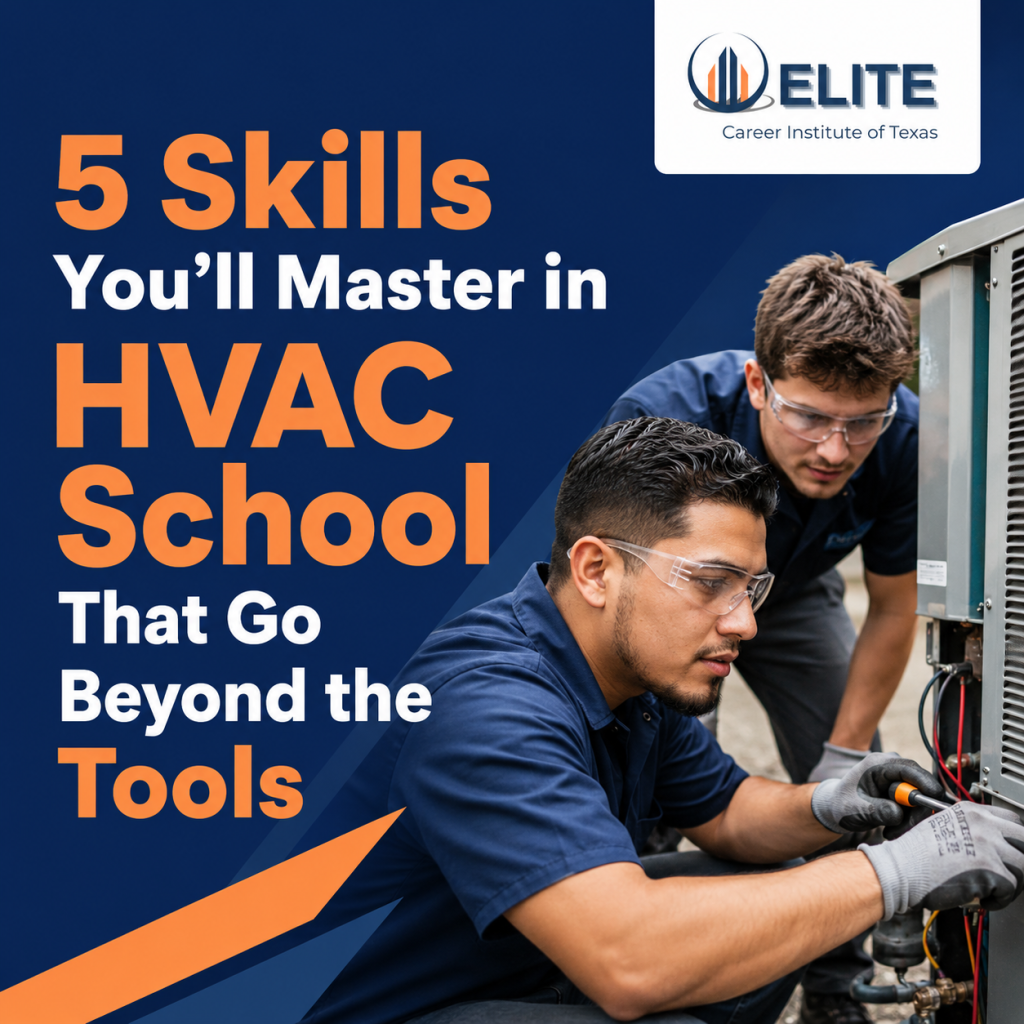
HVAC school teaches more than tools, equipment, and technical procedures. Students can also build important professional skills such as problem solving, communication, customer service, time management, attention to detail, adaptability, teamwork, and professionalism.
At Elite Career Institute, HVAC training is designed to help students build both technical knowledge and real-world habits that may support entry-level opportunities in the field. These skills can help students prepare for service calls, customer interactions, troubleshooting, safety procedures, and professional work environments.
This guide covers five skills students can develop in HVAC school that go beyond the tools, including why each skill matters and how it can support future growth in the HVAC industry.
HVAC School Skills at a Glance
| Skill | Why It Matters |
|---|---|
| Problem Solving | HVAC students can learn how to diagnose issues, evaluate symptoms, and work through troubleshooting steps. |
| Communication | Clear communication can help technicians explain issues, listen to customer concerns, and support a better service experience. |
| Customer Service | Customer service skills can help students prepare for client-focused work in homes, businesses, and service environments. |
| Time Management | HVAC work may involve multiple tasks, appointments, repairs, or installations, making organization and time management important. |
| Attention to Detail | Small details can affect safety, system performance, measurements, installation steps, and repair quality. |
| Adaptability | HVAC students can build flexibility as they learn new systems, technologies, tools, and job site expectations. |
| Teamwork | Technicians may work with other technicians, dispatchers, instructors, contractors, or customers, so teamwork can be valuable. |
| Professionalism | Professional habits can help students prepare for job sites, customer interactions, safety expectations, and employer standards. |
1. Problem-Solving and Critical Thinking
HVAC systems are complex. They involve electrical components, airflow systems, refrigeration cycles, and mechanical parts all working together. When something goes wrong, there’s rarely a simple, obvious answer.
That’s where problem-solving comes in.
In HVAC school, you’ll learn how to:
- Diagnose system issues step-by-step
- Analyze symptoms and trace them back to root causes
- Use logical thinking instead of guesswork
- Apply troubleshooting strategies across different systems
Rather than just memorizing fixes, you’ll develop a mindset that helps you approach challenges methodically. For example, if an air conditioning unit isn’t cooling properly, you’ll learn to evaluate everything from refrigerant levels to airflow restrictions and electrical connections.
Why it matters:
Employers aren’t just hiring technicians—they’re hiring problem-solvers. The ability to think critically on the job can set you apart and lead to faster promotions, higher pay, and more responsibility.
2. Communication and Customer Service
HVAC technicians don’t just work with systems—they work with people. Whether you’re explaining a repair, recommending a system upgrade, or walking a customer through maintenance tips, communication is key.
In HVAC training, you’ll build skills like:
- Explaining technical issues in simple, clear terms
- Listening to customer concerns and asking the right questions
- Providing honest, professional recommendations
- Managing customer expectations during repairs or installations
This is especially important because many customers don’t understand HVAC systems—and they’re often dealing with stressful situations, like a broken heater in winter or a failing AC in the summer.
Why it matters:
Great communication builds trust. Customers are more likely to return—and recommend you—when they feel heard, respected, and informed. In many cases, strong people skills can be just as valuable as technical expertise.
3. Time Management and Organization
HVAC technicians often juggle multiple responsibilities in a single day. You might have several service calls, installations, or maintenance appointments—all with different timelines and priorities.
That’s why time management is a critical skill you’ll develop in school.
During your training, you’ll learn how to:
- Prioritize tasks based on urgency and complexity
- Stay organized with tools, parts, and documentation
- Work efficiently without sacrificing quality
- Adapt when schedules change or unexpected issues arise
Instructors often simulate real-world scenarios where time matters, helping you build habits that translate directly into the workplace.
Why it matters:
Being reliable and efficient makes you a valuable team member. Employers look for technicians who can stay on schedule, meet deadlines, and handle busy workloads without getting overwhelmed.
4. Attention to Detail
In HVAC work, small details can make a big difference. A loose connection, incorrect measurement, or overlooked component can lead to system inefficiency—or even failure.
HVAC training helps you develop a sharp eye for detail by teaching you to:
- Follow precise installation procedures
- Double-check measurements and system settings
- Ensure safety standards are met
- Identify subtle signs of wear or malfunction
You’ll also learn how to read diagrams, schematics, and technical manuals, which requires careful focus and accuracy.
Why it matters:
Attention to detail directly impacts performance, safety, and customer satisfaction. Technicians who consistently get things right the first time build strong reputations and reduce costly callbacks.
5. Adaptability and Continuous Learning
The HVAC industry is constantly evolving. New technologies, energy-efficient systems, smart thermostats, and updated regulations are changing the way technicians work.
In HVAC school, you’ll develop the ability to adapt by:
- Learning foundational concepts that apply across systems
- Staying open to new tools and technologies
- Practicing hands-on skills in different scenarios
- Building confidence in learning something new
This mindset is crucial because your education doesn’t stop after graduation. Many technicians continue to earn certifications, specialize in certain systems, or advance into leadership roles.
Why it matters:
Adaptability keeps your career moving forward. The more willing you are to learn and grow, the more opportunities you’ll have to expand your skills and increase your earning potential.
Bonus: Teamwork and Professionalism
While HVAC technicians often work independently, they’re also part of a larger team. You may collaborate with other technicians, dispatchers, contractors, or business owners to get the job done.
HVAC training helps you build:
- Strong work ethic and accountability
- Respect for team roles and responsibilities
- Professional behavior on job sites
- Confidence in representing your company
Why it matters:
Professionalism can open doors. Whether you’re aiming for a leadership position, starting your own business, or simply building a solid career, how you present yourself matters.
How These Skills Set You Apart
Anyone can learn how to use tools—but not everyone develops the full range of skills needed to succeed in the HVAC industry.
By mastering these abilities, you’ll be prepared to:
- Handle real-world challenges with confidence
- Build strong relationships with customers and coworkers
- Stand out to employers in a competitive job market
- Grow your career over time
At Elite Career Institute, the goal is to help students become more than just technicians. It’s about preparing you to be a well-rounded professional who can adapt, communicate, and lead in the field.
Turning Skills Into a Career
The HVAC industry offers a unique combination of stability, growth, and opportunity. As homes and businesses continue to rely on heating, ventilation, and air conditioning systems, skilled technicians remain in high demand.
But technical knowledge alone isn’t enough to build a lasting career.
The skills you develop in HVAC school—like problem-solving, communication, and time management—are what truly set you up for long-term success. These are the abilities that help you:
- Earn customer trust
- Advance into higher-paying roles
- Take on leadership opportunities
- Even start your own HVAC business someday
Start Building Skills That Last
If you’re ready to begin a hands-on career with real growth potential, HVAC training can be your first step. And the best part? You won’t just learn how to work with systems—you’ll learn how to succeed in a professional environment.
At Elite Career Institute, students gain the technical training and real-world skills needed to thrive in the HVAC industry and beyond.
Ready to take the next step?
Explore our HVAC training program at Elite Career Institute and start building the skills that can power your future—both on and off the job site. Contact us today for more information.
Leave a Reply