
June 30, 2026
How to Switch Careers and Start in HVAC
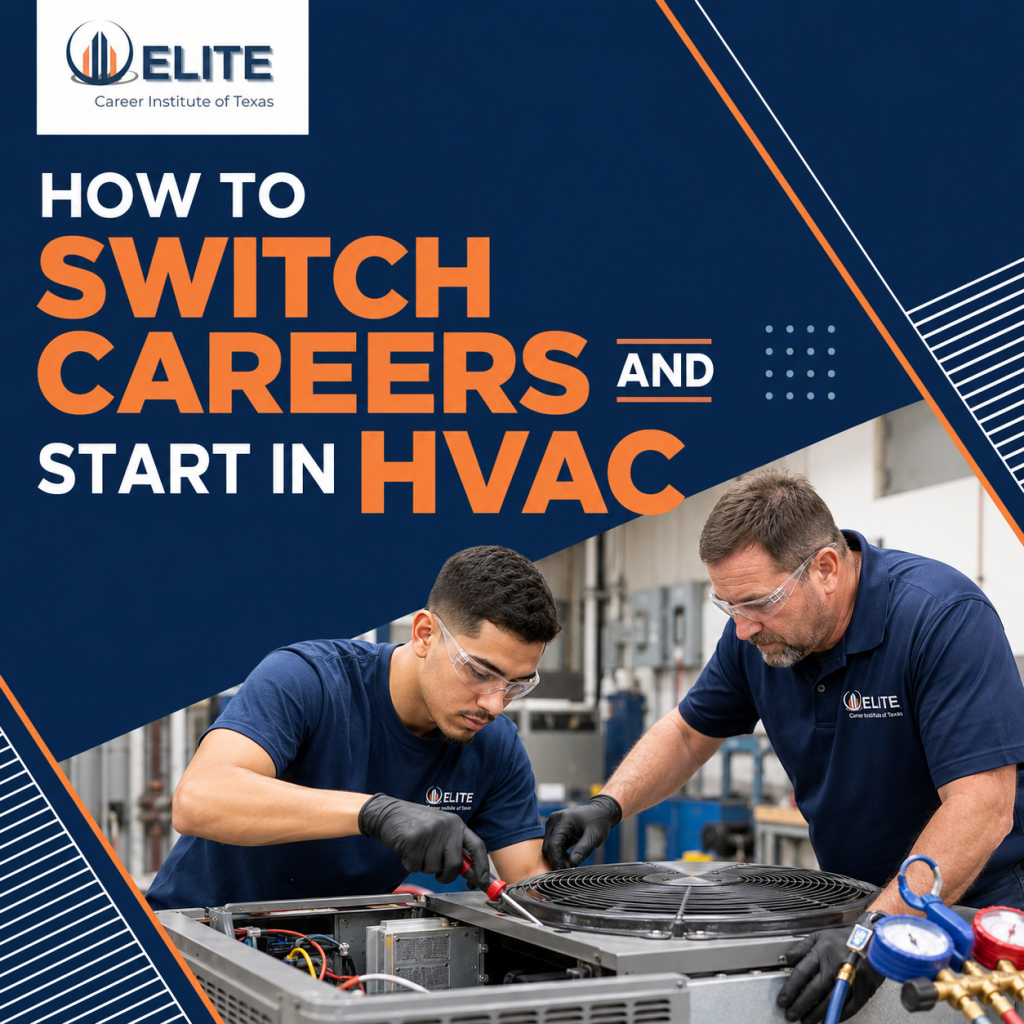
Switching careers into HVAC starts with learning what HVAC technicians do, choosing a hands-on training program, understanding certification or licensing requirements, building practical skills, and preparing for entry-level opportunities. HVAC can be a strong path for students who want active work, technical training, problem solving, and a career that does not require a traditional four-year degree.
At Elite Career Institute, students can build HVAC skills through career-focused training, hands-on learning, instructor support, and career services. This type of training can help career changers gain a foundation in heating, ventilation, air conditioning, safety, troubleshooting, and real-world job preparation.
This guide explains how to switch careers and start in HVAC, including what to expect from training, how to plan your transition, what skills may transfer from your previous career, and how to prepare for your next step.
Switching Careers to HVAC at a Glance
| Step | What to Know |
|---|---|
| Research the HVAC Industry | Learn what HVAC technicians do, including installation, maintenance, troubleshooting, repairs, safety practices, and system support. |
| Choose a Training Program | Look for hands-on HVAC training, experienced instructors, certification preparation, and career support resources. |
| Review Certification Requirements | HVAC students should understand requirements such as EPA Section 608 Certification and any state or local licensing rules that may apply. |
| Plan Your Career Transition | Career changers can create a financial plan, review schedule options, set realistic goals, and talk with admissions about next steps. |
| Build Hands-On Experience | Hands-on training can help students practice technical skills, use real equipment, and build confidence over time. |
| Use Transferable Skills | Skills like customer service, problem solving, time management, communication, and technical aptitude may support the transition into HVAC. |
| Prepare for the Job Search | Students can highlight training, certifications, hands-on experience, and transferable skills when applying for entry-level HVAC roles. |
| Explore Long-Term Growth | With experience and continued learning, HVAC professionals may explore paths in service, installation, supervision, specialization, or business ownership. |
Why Consider a Career in HVAC?
Before diving into the “how,” it’s important to understand the “why.” HVAC is a field that continues to grow, offering consistent demand and opportunities across residential, commercial, and industrial sectors.
Strong Job Demand
Heating and cooling systems are essential in nearly every building. That means HVAC technicians are needed year-round to install, maintain, and repair systems. This demand helps create job stability—even during economic shifts.
Hands-On, Active Work
If you’re tired of sitting at a desk all day, HVAC offers a more dynamic work environment. Technicians work in different locations, solve real-world problems, and see the results of their work immediately.
Competitive Earning Potential
With the right training and experience, HVAC professionals can earn a solid income. Many technicians also have opportunities for overtime, specialized certifications, or even starting their own businesses.
Fast Entry Into the Workforce
Unlike traditional four-year degrees, HVAC training programs can often be completed in months—not years—helping you transition into your new career more quickly.
Signs You’re Ready for a Career Change
Not sure if now is the right time? Many people who switch into HVAC share similar motivations:
- You feel burned out or unfulfilled in your current job
- You want a more stable or recession-resistant career
- You’re interested in learning a practical, in-demand skill
- You want better earning potential without years of schooling
- You enjoy working with your hands or solving technical problems
If any of these resonate with you, HVAC could be a strong fit.
Step 1: Research the HVAC Industry
Before making any big decisions, take time to understand what HVAC technicians actually do.
Daily Responsibilities May Include:
- Installing heating and cooling systems
- Troubleshooting and repairing equipment
- Performing routine maintenance
- Reading blueprints and technical diagrams
- Ensuring systems meet safety and efficiency standards
HVAC technicians need both technical knowledge and problem-solving skills. It’s a career that blends physical work with critical thinking.
Step 2: Choose the Right Training Program
One of the most important steps in your transition is getting the right education. While some people enter the field through apprenticeships, many career changers benefit from structured training programs that provide both foundational knowledge and hands-on experience.
What to Look for in an HVAC Program:
- Hands-on training with real equipment
- Experienced instructors with industry knowledge
- Preparation for certification exams
- Career support services, such as resume help or job placement assistance
At Elite Career Institute, our program is designed with career changers in mind—offering practical training that prepares students for real-world HVAC work.
Step 3: Understand Certification and Licensing
Most HVAC technicians need certain certifications to work legally and safely.
Common Requirements Include:
- EPA Section 608 Certification – Required for handling refrigerants
- State or local licensing (depending on where you plan to work)
- Optional certifications for specialization (like commercial HVAC or energy efficiency)
Your training program should help prepare you for these certifications, making the transition smoother.
Step 4: Plan Your Transition Strategically
Switching careers doesn’t always happen overnight. Many people balance their current job while preparing for their new one.
Tips for a Smooth Transition:
- Create a financial plan to support yourself during training
- Consider part-time or flexible programs if you’re working
- Set realistic goals for when you want to enter the HVAC workforce
- Talk to current HVAC professionals to learn from their experiences
Taking a strategic approach can reduce stress and help you stay focused on your long-term goals.
Step 5: Build Hands-On Experience
In HVAC, experience matters. Employers often look for candidates who can demonstrate real-world skills—not just classroom knowledge.
Ways to Gain Experience:
- Participate fully in hands-on training labs
- Seek internships or entry-level positions
- Volunteer for projects or shadow experienced technicians
At Elite Career Institute, hands-on training is a key part of the learning experience, helping students build confidence before entering the workforce.
Step 6: Prepare for the Job Search
Once you’ve completed your training, it’s time to start applying for HVAC jobs.
Entry-Level Roles to Look For:
- HVAC technician assistant
- Maintenance technician
- Installation technician
Job Search Tips:
- Highlight your transferable skills (more on that below)
- Showcase certifications and hands-on training
- Be open to starting in an entry-level role to gain experience
- Use career services offered by your training program
Transferable Skills You Might Already Have
One of the biggest advantages of switching careers is that you don’t start from zero. Many skills from your previous job can carry over into HVAC.
Examples of Transferable Skills:
- Customer service: Communicating with clients and explaining issues clearly
- Problem-solving: Diagnosing system issues and finding solutions
- Time management: Managing appointments and completing jobs efficiently
- Technical aptitude: Understanding systems and tools
Even if your background seems unrelated, these skills can give you a strong foundation in HVAC.
Challenges to Expect (and How to Overcome Them)
No career change is without challenges. Being prepared can help you navigate them more effectively.
Learning Curve
HVAC involves technical knowledge that may be new to you. The key is consistency—practice, ask questions, and stay engaged in your training.
Physical Demands
The work can be physically active, involving lifting, climbing, and working in different environments. Staying physically prepared can make a big difference.
Starting Fresh
You may begin in an entry-level role, even if you had seniority in your previous career. Focus on long-term growth rather than short-term status.
Long-Term Career Growth in HVAC
One of the biggest benefits of entering HVAC is the opportunity for advancement.
Potential Career Paths:
- Senior HVAC technician
- System designer or estimator
- HVAC supervisor or manager
- Business owner
- Specialized technician (commercial systems, refrigeration, etc.)
With experience and continued education, your career can evolve in many directions.
Why Choose Elite Career Institute?
Making a career change is a big step—and having the right support can make all the difference.
At Elite Career Institute, students benefit from:
- Career-focused training: Programs designed to prepare you for real HVAC jobs
- Hands-on learning: Practice with tools and systems used in the field
- Supportive instructors: Learn from professionals who understand the industry
- Career services: Guidance to help you transition into the workforce
Whether you’re coming from an office job, retail, or another trade, Elite Career Institute provides a pathway to help you build a new future in HVAC.
Is HVAC the Right Move for You?
Switching careers is ultimately a personal decision—but HVAC offers a compelling combination of stability, opportunity, and hands-on work.
If you’re ready to:
- Learn a practical, in-demand skill
- Work in a dynamic and essential industry
- Build a career with long-term growth potential
Then HVAC could be the fresh start you’ve been looking for.
Take the First Step
Every career change starts with a single step. Whether that’s researching programs, touring a campus, or talking to an admissions advisor, taking action will move you closer to your goal.
At Elite Career Institute, we’re here to help you turn your career change into a career opportunity. Contact us today.
Leave a Reply